This is part two of a two-part post. Part 1 was written before the incident at the US Capitol. The following reflects our experience and our thoughts on travel after.
Let’s begin with some recent warnings to travelers. Read each, then try to determine what destination each refers to. We’ll get to the answers later in this post.
“higher incident of violent crime…”
“…travelers warned of laws ‘that may appear harsh…'”
‘travelers should “…remain alert and discreet while in entertainment areas…” due to potential of violent crime…’
“Use discretion when deciding whether to link to free internet services available in public places to connect to your corporate network.”
“the possession of firearms and the frequency of violent crime are generally more prevalent… Within large metropolitan areas, violent crime more commonly occurs in economically disadvantaged neighborhoods, particularly from dusk to dawn. Verify official neighborhood crime statistics before planning an outing.”
“…it is comparatively easy to obtain possession of guns. If you are the victim of an armed attack, do not try to fight back!”
“Don’t make flippant remarks about bombs or terrorism, especially when passing through …airports…”
“Tap water—while not very tasty (it’s chlorinated)—is usually considered safe to drink.”
Now, on to the story…
For years, we’ve discussed a trip to Washington, DC. And with all the incidents happening across the world, it seemed safer to forego a spring trip abroad for a more sensible trip within our own borders. So with a long Easter weekend ahead of us, we joined the other 1.5 million visitors during DC’s annual Cherry Blossom Festival.
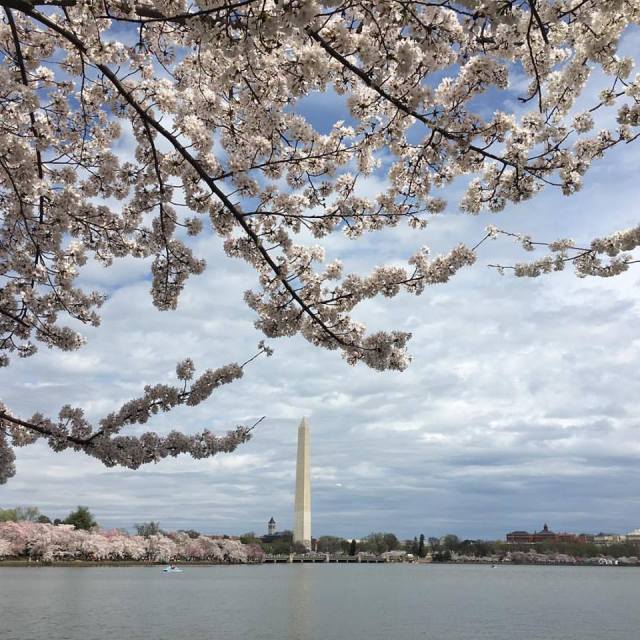
And it was beautiful. Truly spectacular. During the day, during the evening, every moment felt like a perfectly staged explosion of spring blossoms. It was no wonder so many others flocked to the city during this time. The population easily doubled over a single weekend. And everyone wanted to see the same places, leading to exorbitantly long lines. One day, we ventured to one of the Smithsonian Museums only to find a 2-hour wait to get in. Yeeesh.
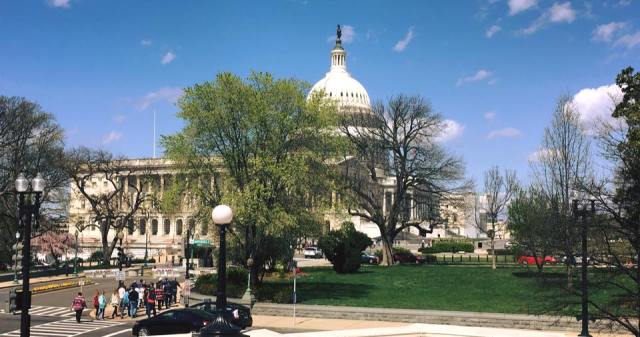
Which brings me to the “almost experience” at the US Capitol. We scheduled a tour through a US Congressman (a great benefit of being a US citizen). Our guide, an intern for Congressman Richard Hudson, was incredibly generous with his time. We always appreciate a knowledgeable guide, but someone who also has an internal knowledge is a particularly sought-after treat. So we realized our concern with the crowds was legitimate when our intern guide–someone who frequents the Capitol daily and is accustomed to lines within–commented that he’s “never seen it this crowded”. We trooped through, waited patiently to view the Rotunda, the Crypt, the spot where John Quincy Adam’s desk once sat, etc. But alas, the lines were just too long for our weary feet and aging bodies to endure. So we ended our tour an hour early, sadly throwing in the white flag before seeing the Gallery.


And upon return to our hotel, we heard the news. A shooting at the US Capitol. In the Visitors’ Center. That day. Moments after we’d stood in the exact same space. It was rattling just to comprehend we’d occupied the same space as the unthinkable, never mind those that were actually there at the same time and experienced the chaos and panic firsthand.
Please don’t be mistaken. It was handled incredibly well by security. The gun was found as soon as the owner went through security. And I even remember commenting how thorough the security checks were throughout the building. I could not have felt safer. The reality is we simply cannot always control the actions of others.
Now let’s return to that initial list at the top of travel warnings. Did you guess where each was from? That water one was obviously Mexico, right? And the “harsh laws” – southeast Asia? The violent crime must be a warning for people travelling to Syria. Obviously, most of these must refer to third world countries…
Every single one is advice for travelers entering the United States. Don’t believe it? Click here and here for proof, all backed up by the original site from each country’s department of state. I mention this because security is relative. We felt perfectly safe throughout our long weekend in the nation’s capitol. There are currently no active travel warnings or alerts from Canada, Australia, or the United Kingdom (had to limit my research to sites in English).
So what warnings do we, as US travelers, receive when heading abroad?
Our most trusted resource for travel alerts is the US Department of State website, specifically under Travel, Alerts and Warnings, directly accessible here. They provide two types of notices: warnings and alerts. Warnings are issued when they want travelers to actually reconsider traveling to that particular destination due to civil war, intense crime, unstable government, frequent terrorist attacks… the really nasty stuff. Nations currently falling in this category include Iran, Syria, Tunisia, Sudan, Ukraine, Libya, Central African Republic, along with Mexico and Turkey (recent additions).
In comparison, an alert is issued for short-term periods when there is simply an event or occurrence that travelers should be aware of (think an election, a recent strike or disturbance, an outbreak of a disease, or evidence of an elevated risk of terrorist attacks). It’s kind of their official way of saying, “Heads up! This is happening, so be aware.” For example, an alert was issued for the South Pacific in the fall during cyclone season. As of mid-March this year, an alert was also issued for Europe, due to the attack in Brussels, and will expire June 20, 2016, presumably barring any other incidents. As the site explains, travelers should pay attention to their surroundings, avoid crowded places, and exercise particular caution during large festivals or religious events. In other words, the same thing we should do whether an alert has been issued or not, as we cannot always control the actions of others.
Because what was our biggest concern whether here or abroad? The crowds.


Why? Because crowds attract trouble: pick-pockets, scams, generally higher amounts of chaos, selfie sticks, germs… you name it, a crowd has it and too much of it. And, as the State Department alludes to even in their most mild travel advisories, crowds are common targets for bigger incidents.
Which leads to the conclusion of this two-part discussion of our desire to travel: Has our most recent experience changed our minds?
No, our experience at the US Capitol has not changed our perspective on travel in the slightest. We will continue to travel, inside and outside of the United States. We will continue to see the world with our own eyes, rather than depend on the media. We will continue to plant our feet outside of our own borders. And we will continue to break our own assumptions by experiencing more than we know right now. We will simply exercise caution, be aware of our surroundings, and avoid crowds, as we always have. And maybe head to DC during a different season. Like winter.
 A Belle Abroad