I used to be one of those “get over it” people. You know what I’m talking about – the person that rolled their eyes at other people’s issues and shrugged it off with some form of, “Ugh. Get over it.” That was me. Unsympathetic. Eyes forward. Feet moving on.
The following is my formal apology for that. And for any harm it ever caused. It’s lengthy, because it should be.
I keep getting asked where I’ve been, if everything is okay, why I haven’t posted in a while, and what’s up. Such incredibly kind followers, friends, and loved ones, you are.
The truth is… I’ve been busy. I don’t mean “avoid an unwanted friend” busy. I mean actual, 90 miles per hour, will-this-train-ever-stop, haven’t-even-called-my-grandmother kind of busy.
In lieu of a full PowerPoint presentation of my life this spring, here is a brief-ish overview. Forgive me for the less-than-stellar writing composition.
Between February and April:
- Bought a house in Fuquay-Varina. Cue the domino effect of change…
- Dealt with the insanity of buying a house during one of my busiest work seasons. At one point, during the initial stress of mortgage negotiations and lending paperwork, I was presenting at a conference in Pinehurst while planning a significant work event back in Smithfield. There were moments I was juggling between my phone, my clicker, and my laptop, and hoping I didn’t mix them up.
- Once the new home closed, the process of repairs and improvements began. I attempted to juggle repairmen schedules on my own, but ultimately had to put that juggling massacre on John.
- Packed up my house in Clayton and moved to Fuquay-Varina, with the help of professional movers. Twice. This took months to not only pack up an entire life, but also to determine what to leave, sell, give away, repair, etc.
- I sold my townhome in Clayton – which many of you just now learned I had. It was time to let that go too.
- During this “shuffle” of real estate, we found a tumor on Finley’s leg. We had it removed and learned it was benign. But she lived in a cone through the time the old house was packed, moved, and unpacked in the new house.
- Finley was also diagnosed with pancreatitis. To treat it, we put her on a prescription low fat dog food (read that as expensive).
- I put my Clayton house on the market. I accepted an offer within 72 hours. But also in that 72 hours…
- My step-sister underwent a significant surgery (she’s good, now). I sat in the waiting room, violently crying, as I debated who to sell my home to. And while juggling those two emotionally trying moments, I received a call that my work life was about to get very, very stressful.
- Many of the difficult “dates” passed almost in tandem with moving and Holly’s surgery (Chris’ birthday, the day of his surgery, the day he left…).
- All of this occurred as I commuted to work in Smithfield from Fuquay-Varina, and rarely missed a full day.
May: The month mascara was a waste…
- In 10 days total, the following transpired:
- May 6: Final move out of my house in Clayton; another round of movers and moving truck. And tears.
- May 7: Finley stopped eating her prescription dog food, and refused to eat her old (fat) dog food. She would only eat boiled, shredded chicken, while her bathroom habits decreased dramatically.
- May 10: We took Finley to the vet to learn something was very, very not right. We scheduled an ultrasound for the next week.
- May 10: Massive work event, Round 1, in my hands.
- May 11: I closed on my house in Clayton, physically handing over the keys to someone else. So many ugly cries that day.
- May 14: Round 2 of work event.
- May 15: At the ultrasound appointment, we learned heartbreaking news: Finley had aggressive liver cancer. It couldn’t be treated, only managed. And dis-comfortably to Finley, at that. She wasn’t eating, was incredibly bloated, and was visibly miserable. We only had one humane option. That night, we gave her all of her favorite things: pizza crust, dog ice cream, and snuggles.
- May 16: We took Finley to the vet, took off her collar for the last time, and cried harder than either of us feel proud of, as we put her to sleep.
In the last few months, I have endured past my endurance breaking point. I have stretched the limits of my emotional capacity. From day to day, I could be anywhere from “just finished crying”, to “on the brink of a breakdown”, to “don’t mess with me”, to laughing hysterically just to feel the release of positive energy.
I am exhausted. My current prayer is not exactly grateful for the experience. Rather, I’m just praying for a little normalcy for a while. Just a week without selling anything, buying anything, medical trauma, a moving box, a mortgage company, or a visit to an attorney’s office would be a relief.

Sorry if the language above offends you. But… for real.
Which brings us to today, where I’m sitting on my new porch, drinking a much-needed glass of wine, and reflecting on the last few months. And what I keep coming back to is empathy.
We all love to be cheerleaders for each other. And I’m blessed enough to have quite a few. Friends and family who pipe up with, “You’re so strong!”, “You got this!”, “You’re amazing!”, etc.
Now, for me, I tend to have a pretty strong internal monologue of encouragement going at all times. Let’s just be honest… it’s necessary. If you can’t cheer for yourself, it’s tough to hear others’ cheers for you.
But what I’ve found through the last few months is none of those typical cheers or cliches made me feel any better. Many times, those words actually made it worse. I tend to have a strong enough rationalization compass that I can brush it off. But not everyone going through roller coasters of emotions is quite there. For me, the emotional mountains were a bit too tall and frequent to keep “getting over”. What I actually found myself gravitating towards, and what actually gave me enough healing to foster energy to face each rising mountain… was empathy.
This is not to discount the effort of our life cheerleaders – far from it. Rather, if you want to go through the effort of being someone’s cheerleader, I imagine you also want it to be effective.
So, if you’re willing to read further, and open yourself up to reflection by seeing what is and is not helpful to hear, read on. If not, it’s completely understandable if you feel satisfied that you’re caught up on Katie’s life, and would rather just move along in your social media scrolling.
Cheerleader Phrases & Their Helpfulness Factor
“You can do this.” ~ Not helpful. Zero empathy. This is the go-to for so many of us. But when you’re on the other side, you realize it justs make the person feel like you’re glad they’re handling it and not you. It almost implies, “I expect you will figure this out, somehow, whether you feel capable at the moment or not.” It seems like it’s putting faith in the person’s ability to reach a high expectation. But to the other person, when they’re really low, it just feels like you’re not there to support them in their climb.
“You’re so strong.” ~Minimally helpful. It is a nice compliment to hear. But it tends to make the person feel like they have to be strong all the time – so, so, so not healthy. Let’s talk more on this in a later post.
“What can I do to support you?” ~Yes! In full transparency, I rarely take people up on help, so you’re probably not going to get dragged into anything from me. But the willingness to be a part of it – and willingness to hear what I need – makes me (and others) feel like I’m actually not alone. Yes, use these words more often.
“You’re just going to have to figure out how to get over it.” ~So unhelpful that this can actually do more harm than good. When you say this, you’re not only disqualifying the other person’s barriers, you’re also disqualifying their human behavior of having emotions at all. For me, this has actually fostered anger, and added to my emotional barriers. The last thing you want to do to someone who is emotionally unstable is make them even more emotional. Volcano eruption incoming…
“You just have to stay positive. At least [insert something they should be grateful for]…” ~ Bad news: not helpful to someone who is seriously struggling. I do wish it were that easy. But sometimes, there’s things that have to happen before one can even access the positives.
“You look exhausted.” ~Thanks for the reminder. Typically, just not nice to say.
“I can see that you’re overwhelmed. What can I do?” ~ So much better than the above.
“You’re (insert an emotion here).” And then sit down to listen…. ~ Absolutely, without a doubt, the most authentic form of empathy I’ve experienced. Because many times there is nothing anyone can do to help. Except listen. Just those moments to explain your emotions to another human being, without any intention of someone trying to fix them, is vastly more effective in helping the person get over their current emotions and hurdles. It makes the other person feel like they’re not alone. And it works almost every time.
Don’t try to listen for a solution. Don’t try to give them a similar story from your own life. Just listen. Listening is not an art that needs to be muddled with your own remixes and renditions. This is not an art form that needs any modern day improvements. Listening is just that… ears only, mouth shut. Tear duct involvement is optional.
Book after book and research after research backs this up. Fixing someone’s emotional problems is not something most of us are qualified to do. Rather, human contact and connection is what we’re all wired to do, and to need. If you have two ears and the ability to sit still for more than five seconds, you are capable of listening.
Now, I know this one comes off a bit preachy. For that I partially apologize. But I moreso apologize for being in the congregation too. As stated in the beginning, I’ve said almost everything listed above. Possibly causing harm to others. That was not intended. I had just never been in a place where I didn’t already have a visible bridge to “get over it”. But these last few years have taught me a lot about trauma, and emotion, and coping, and healing.
I used to gravitate towards people like me – the “get over it” folk. The unsympathetic, analytical, action-takers. That was before I knew what it felt like to be in a place without bridges, without connection, and facing mountain after emotional mountain.
Today, I tend to gravitate to those who show true empathy. They are the people who help us at our lowest. They are the people who provide the bridges we cannot yet see. They are the people who let us know we are not alone, even when are absolutely sure we are. They are the people that create human connections when others shun our humanity of emotions.
They are the people we tend to need the most. Because they are the people who understand us when we are least understood.
To my friends and family who are “blue” with empathy: thank you. For being willing to step into the dark to help others feel the light. And for helping us climb life’s mountains, by sitting with us in the valleys.
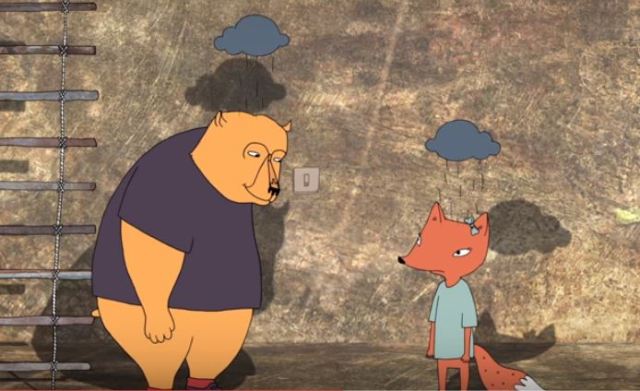
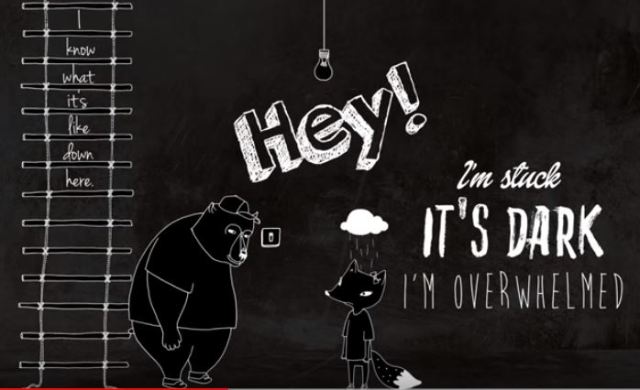
If this has perked your interest, click the link below to learn a bit more about what empathy is and is not, from research professor, Brene Brown.
 A Belle Abroad